

Dry hair is especially lacking in lipids and its cuticle retains less water. The result: rough, dull, brittle and less supple lengths. This guide helps you distinguish between dryness, dehydration and damage, and then build a suitable routine.
Why hair becomes dry
Hair becomes dry when the protective sebum no longer reaches the lengths and the cuticle, its outer layer, is damaged and lets water escape. The hair then loses its suppleness, shine and resistance.
Sebum, poorly distributed along the lengths
At the root, the scalp produces sebum, an oily film that protects and softens the hair. The problem is that it circulates with difficulty to the ends, especially on long, curly or already damaged hair, where each curve slows its progress [2]. The lengths and the ends, the oldest parts of the hair, are therefore naturally the driest.
The cuticle, the hair's barrier
Each hair is covered with a cuticle, a layer of scales that overlap like the tiles of a roof. When these scales are smooth and closed, the hair retains its water, reflects light and appears shiny. When they lift or become damaged, the hair becomes porous, loses its hydration, catches and appears dull [1]. The health of the cuticle therefore makes all the difference.
Daily aggressions
Many factors damage the cuticle and dry out the hair. Heat, colorings, bleaching, UV, friction, very hot or hard water weaken the cuticle and make the hair more porous and brittle.
Heat and UV, in particular, degrade keratin, the protein that structures the hair: beyond about 180 °C, heating devices break the internal bonds of the fiber, and UV rays oxidize its amino acids [5][6].
Dry, dehydrated or damaged?
We often confuse these three states, even though they do not call for the same response. A hair can moreover accumulate all three.
| Dry hair | Dehydrated hair | Damaged hair | |
|---|---|---|---|
| What is missing | Lipids (fats) | Water | An intact cuticle |
| Main cause | Poorly distributed sebum, hair nature | Cold, sun, drying products | Heat, colorings, bleaching, friction |
| Signs | Rough, dull, lack suppleness | Rough, frizzy, electric | Split ends, breakage, porosity, straw feel |
| The right answer | Nourish with lipids | Hydrate with water | Repair and cut split ends |
In practice, dry hair mainly needs lipids, dehydrated hair needs water, and damaged hair needs strengthening and sometimes a cut.


Proteins, lipids and hydration: the 3 pillars
Healthy hair relies on three balanced inputs: proteins that structure it, lipids that nourish and protect it, and water that makes it supple. Dry hair mainly lacks lipids, damaged hair also lacks proteins.
Proteins: strengthen the fiber.
Lipids: nourish and protect.
Hydration: provides suppleness and comfort.
On dry hair, lipids are often the main need, but the three must remain balanced.
The protein and hydration balance
Here is the point that few guides explain. When the balance between proteins and hydration is broken, hair behaves badly, and we often add the wrong care, which worsens the problem.
| Observed sign | Probable imbalance | What to do |
|---|---|---|
| Straight, dry, rough hair, that breaks cleanly | Excess proteins, lack of hydration | Hydrating mask, reduce protein treatments |
| Soft, elastic hair, without bounce, greasy once wet | Excess hydration, lack of proteins | Protein treatment, space out very hydrating masks |
| Supple, shiny hair, with bounce | Balance achieved | Maintain the alternation |
The rule is simple: alternate hydrating and protein treatments according to needs, and always keep nutrition as the foundation. This balance also depends on your porosity, a point we detail in our curly hair guide.

Gentle washing routine
- gentle shampoo
- conditioner or mask
- leave-in or cream
- night protection
Cleanse without stripping
Cleanse especially the scalp with a gentle shampoo, without rubbing the lengths. Space out washes if your hair is very dry and clarify occasionally if products build up. Some people also adopt co-washing, a wash with a cleansing conditioner without harsh surfactants, to cleanse gently between two shampoos.
Nourish with the mask
After shampooing, apply a conditioner or mask to the lengths and ends. Once or twice a week, a mask rich in oils or ceramides helps restore suppleness and comfort.
Seal and protect
On still damp hair, apply a leave-in or cream then detangle gently from the ends to the roots. At night, a satin pillowcase limits friction and loss of hydration.
Split ends, we cut them
A word on split ends. A split end cannot be permanently repaired: treatments can temporarily smooth it, but only cutting truly eliminates it.


The oil bath: complete technique
The oil bath is the most nourishing treatment for dry hair: we apply a vegetable oil to the lengths before shampooing, let it sit, help with a little heat, then emulsify to rinse well. Done well, it transforms dry lengths.
Which oil to choose
Argan oil nourishes, smooths the cuticle and provides shine [4]. On fine hair, use little oil; on thick or very dry hair, you can opt for richer textures. All oils do not penetrate the hair in the same way either. Some, like coconut oil, penetrate to the core of the fiber and significantly reduce protein loss during washing [7]. To learn more about the active ingredients, see our dedicated guide.
Before or after shampooing?
The oil bath is mainly done before shampooing. After washing, a few drops on the ends can serve as a finish and help limit frizz.
Leave-in time and heat
Let it sit for 30 minutes to a few hours. A gentle heat can improve the comfort of the treatment thanks to a hot towel or cap but it is not essential.
How to rinse well
Emulsify with a little water before shampooing, then rinse. Two gentle shampoos may be necessary if a lot of oil has been applied.
How often
Once a week is generally enough. Adjust according to thickness, dryness and the amount of products used.


The mistakes that dry out
Most mistakes on dry hair come down to removing even more lipids or damaging the cuticle. Here are the main ones to avoid.
Washing with stripping products. Shampoos with harsh sulfates and alcohol-based products dry out a fiber already poor in sebum. Prefer gentleness and space out washes.
Abusing heat. Flat irons, curling irons and dryers that are too hot damage the cuticle and degrade keratin. Reduce their use, lower the temperature and apply a heat protector.
Rubbing with a terry towel. Rubbing wet hair lifts the cuticle and breaks the fiber. Press gently in a microfiber towel or a cotton t-shirt.
Brushing dry and without gentleness. Detangling dry hair with a brush breaks the weakened lengths. Detangle on damp hair and with a wide-tooth comb.
Using tight elastics and damaging accessories. Elastics that are too tight and metal clips break the fiber at tension points. Prefer soft ties and do not tighten too much, especially on wet hair, which is more fragile.
Argold treatments for dry hair
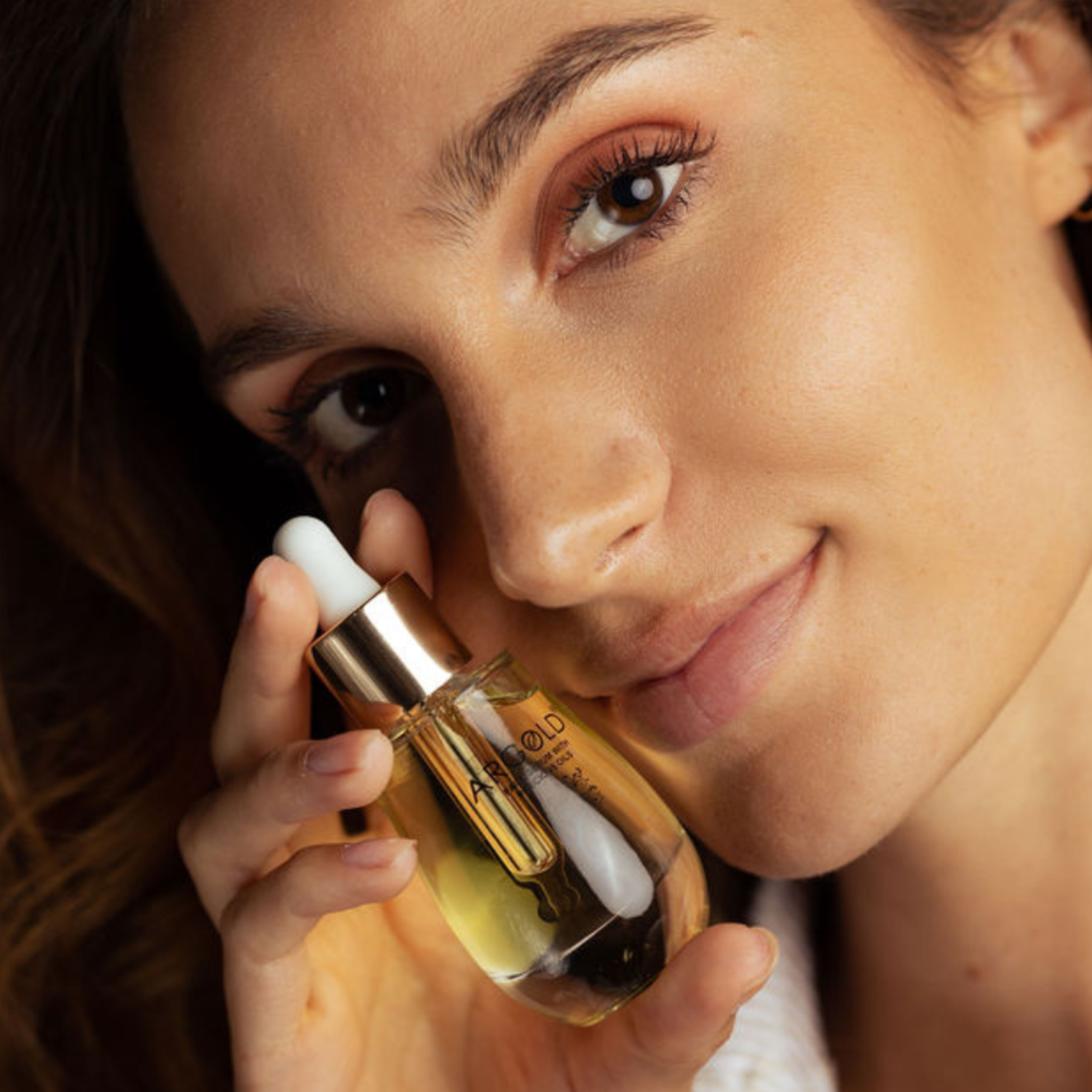
The Hydra-Repulpant range from Argold combines hydrating and nourishing treatments to restore suppleness, softness and comfort to dry and dehydrated lengths.
See the dry hair care collection !
Adapting your routine to the season
Dry hair does not undergo the same aggressions all year round, and the routine must follow. We mainly adjust the richness of the treatments and the protection.
| Season | Dominant aggressions | Adjustments |
|---|---|---|
| Winter | Cold, wind, heating, dry air, beanies, static electricity | Richer masks, regular oil bath, satin-lined beanie, avoid direct contact with wool |
| Summer | Sun and UV, sea salt, chlorine, heat | Protect from UV, rinse after swimming, oil bath before the beach, limit heating devices |
| Autumn and spring | Transition, temperature variations | Observe, maintain hydration and nutrition, adjust the richness of the treatments |
In winter, reinforce nutrition and limit friction. In summer, protect the lengths from the sun, salt and chlorine, then rinse after swimming.
Frequently asked questions about dry hair
Dry or dehydrated hair: how to tell the difference? Dry hair lacks natural oils and feels rough even when well-detangled. Dehydrated hair lacks moisture, swells, and becomes frizzy and static. The former needs nourishment, the latter hydration, and often both.
How often should you do an oil treatment? Once a week for most dry hair, and before every wash for very dry or damaged hair. Always follow with a gentle shampoo after emulsifying the oil.
Can very damaged hair be repaired? Repair treatments can significantly improve its appearance and suppleness, but a severely damaged or split hair fiber cannot be fully restored: a haircut is still necessary to start with a healthy base.
Does an oil treatment make hair greasy? Only if it is not rinsed out properly. Emulsify the oil with a little water before rinsing, then shampoo, twice if necessary. Applied to the lengths rather than the roots, the oil nourishes without leaving hair greasy.
Scientific Sources
- Robbins CR. Chemical and Physical Behavior of Human Hair. Springer, 2012.
- Franbourg A, et al. Current research on ethnic hair. Journal of the American Academy of Dermatology, 2003.
- Cruz CF, et al. Journal of Cosmetic Dermatology, 2016 (hydrolyzed plant proteins, adhesion to damaged areas, and fiber resistance).
- Charrouf Z, Guillaume D. Argan oil and other argan products: Use in dermocosmetology. European Journal of Lipid Science and Technology, 2008.
- Lee Y, et al. Hair shaft damage from heat and drying time of hair dryer. Annals of Dermatology, 2011, 23(4):455-460.
- Santos Nogueira AC, et al. Hair color changes and protein damage caused by ultraviolet radiation. Journal of Photochemistry and Photobiology B: Biology, 2011, 105(1):1-6.
- Rele AS, Mohile RB. Effect of mineral oil, sunflower oil, and coconut oil on prevention of hair damage. Journal of Cosmetic Science, 2003, 54(2):175-192.