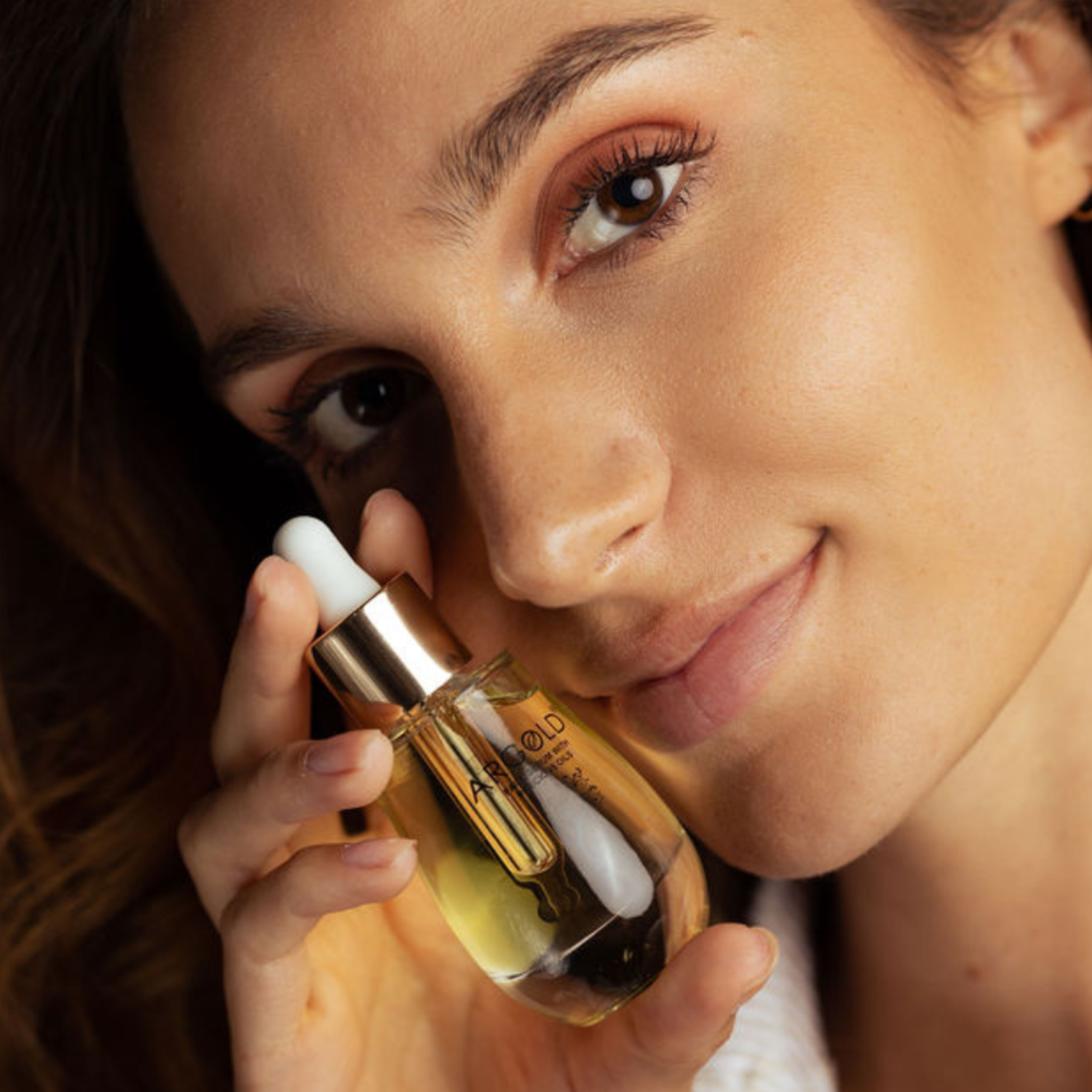


We often take meticulous care of our face, forgetting that our body skin also needs to be hydrated and nourished. The result: tight legs, rough elbows, and skin that feels uncomfortable as soon as the air cools. The good news is that soft, supple body skin requires very little: understanding what it needs, choosing the right texture, and adopting a simple but decisive habit: applying it to damp skin. This guide explains why body skin becomes dehydrated, the difference between hydrating and nourishing, how to choose between oil, lotion, cream, and butter, the ideal routine, and the mistakes to avoid.
Why body skin becomes dehydrated
Body skin becomes dry when its protective film is weakened and it loses more water than it retains. As with the face, it all comes down to the skin barrier.
On the skin's surface, a hydrolipidic film—a mixture of water and oils—retains moisture and protects against aggressors [1]. When this film is damaged, water evaporates more quickly and the skin becomes rough and uncomfortable. However, body skin is subjected to many aggressors:
- cold, wind
- heating and dry air in winter
- hot shower water, harsh soaps
- the skin producing fewer lipids with age
Another particularity is that the density of sebaceous glands varies greatly from one area of the body to another. The face and upper chest are richly supplied with them, while the legs, shins, elbows, and knees have very few, and the palms of the hands and soles of the feet are completely devoid of them [6]. These sebum-poor areas have a naturally more fragile protective film, exposing them to rapid dryness and requiring more attention and care.

Hydration vs. nourishment: the difference
As with the face, hydrating and nourishing do not mean the same thing. Hydrating means providing water to the skin. Nourishing means providing it with oils. Healthy body skin needs both, and confusing the two is the leading cause of hydration that does not last.
| Hydrating | Nourishing | |
|---|---|---|
| Provides | Water | Oils (lipids) |
| Typical active ingredients | Hyaluronic acid, glycerin, aloe vera | Plant oils, shea butter |
| Textures | Lotions, gels, light creams | Oils, balms, butters, rich creams |
| For | Skin that feels tight from lack of water | Rough, dry skin lacking oil |
Hydrating provides water; nourishing provides lipids. For lasting skin comfort, the two must work together. This logic is exactly the same as with the face, which we detail in our dry skin guide.
Oil vs. lotion: which texture to choose
The choice of texture depends on the condition of your skin and the desired finish. A lotion hydrates lightly, an oil or butter nourishes deeply, and a cream bridges the two. Here is how to tell the difference.
| Texture | What it contains | Finish | Ideal for |
|---|---|---|---|
| Body lotion | Lots of water, a little oil | Light, absorbs quickly | Daily use, normal to slightly dry skin |
| Cream | A balance of water and lipids | Comfortable, nourishing | Dry skin, cold season |
| Oil | Lipids, little or no water | Nourishing, satin finish | Nourishment, massage, dry skin |
| Dry oil | Light, volatile oils | Non-greasy, satin finish | Nourishing without a greasy feel |
| Butter, such as shea | Very rich in lipids | Very nourishing, thicker | Very dry areas, hands, feet, cold |
The drier the skin or the colder the season, the more we favor rich textures. For normal skin or in summer, a light lotion is often enough.

Dry oil, the clever texture
A word on dry oil, which is often mentioned but misunderstood. It is an oil formulated from light oils that absorb quickly and leave no greasy film: the skin is nourished and satin-finished, without a sticky feel. It is a good solution for those put off by the greasy feel of oils, or for getting dressed right after.


Complete body routine
A good body routine cleanses without stripping, exfoliates from time to time, and hydrates at the right time, on still-damp skin. The most important step is not the product, it is the timing.
A shower that does not dry out the skin
It all starts in the shower. Prefer
- Lukewarm water, never scalding, as hot water dissolves the protective film and accentuates dryness.
- Choose a gentle, emollient cleanser, or a shower oil, rather than a harsh soap.
- Once or twice a week, a gentle scrub removes dead skin cells, smooths the skin, and helps it absorb treatments better, focusing without forcing on rough areas.
The key step: hydrate on damp skin
Here is what makes all the difference, and what most people neglect. Apply your treatment in the minutes following the shower, on skin that is still slightly damp, simply patted and not rubbed. The thin film of water on the surface is then trapped by the oils in the treatment, which limit its evaporation and reinforce hydration [5]. Then massage in circular motions, which promotes absorption and stimulates circulation. Do not forget the neck, the décolletage, or dry areas such as the elbows, knees, shins, hands, and feet.

The hands and feet, the great forgotten
Highly taxed, often washed, exposed to cold and friction, the hands are among the first to show dryness and age: apply a rich cream after every wash and in the evening. As for the feet, they combine friction and calloused areas: a nourishing treatment in the evening, possibly under cotton socks, keeps them supple. On very dry heels, a generous layer of plant butter works wonders.
Protect and adapt to the season
During the day, on exposed areas, sun protection remains essential, as the sun dries out and ages the skin. Finally, adapt your treatments to the season: in winter, the cold and heating dry out the skin, so switch to richer textures, oils, and butters, and hydrate more often; in summer, you can lighten up with lotions, while continuing to nourish dry areas. For a real moment of care, you can also incorporate a body ritual inspired by the hammam, which we detail in our dedicated guide.

Hydration mistakes
Most mistakes with body skin come down to aggressing it or hydrating it poorly. Here are the main ones to avoid.
Taking showers that are too hot and too long. Hot water dissolves the protective film and dries out the skin. Prefer lukewarm water and short showers.
Using harsh soaps. Harsh and scented soaps weaken the barrier. Opt for gentle, emollient cleansers.
Hydrating without nourishing. Applying a light lotion to skin that lacks oil is not enough: without lipids, the water evaporates. On dry skin, add a nourishing texture.
Hydrating on dry skin, long after the shower. The treatment retains much less water on skin that is already dry. Apply it in the minutes following the shower, on damp skin.
Exfoliating too often or too hard. An aggressive or too-frequent scrub irritates and weakens the skin instead of smoothing it. Once a week, gently, is more than enough.
Argold argan oil for the body
To nourish body skin, Argold relies on organic argan oil, an active particularly suited to dry skin. Rich in unsaturated fatty acids and vitamin E, it nourishes, softens, and protects the skin from oxidative stress [2]. Studies have also shown that regular application of argan oil improves skin elasticity and hydration while reducing transepidermal water loss [3][4].
Made in France and Ecocert Cosmos Organic certified, Argold treatments favor ingredients of natural origin. To learn more about the benefits of argan oil and other active ingredients, see our natural active ingredients guide.
Frequently asked questions about body care
How often should I hydrate my body? Ideally every day, after the shower, on damp skin. In winter or on very dry skin, you can hydrate morning and evening, focusing on dry areas.
Oil or lotion for the body, which should I choose? Lotion hydrates lightly and is suitable for daily use, while oil nourishes deeply and is suitable for dry skin or massage. The two complement each other: lotion for water, oil to seal it in.
Does body oil make the skin greasy? Not if you apply it to damp skin, in a small amount, and choose an oil that absorbs well, such as dry oil or argan oil. Massage until absorbed.
Should I hydrate oily body skin? Yes. Even skin that tends to get oily can lack water. Choose a light texture, such as a hydrating lotion or gel, rather than a rich butter.
Can I use a face oil on the body? Yes, but the reverse is less true: body treatments are often too rich or scented for the face, which is thinner and more reactive. Reserve suitable treatments for your face, as detailed in our face guides.
Why does my skin feel tight after the shower? Often because of water that is too hot and a harsh soap, which remove the protective film. Switch to lukewarm water, an emollient cleanser, and hydrate immediately after.
Is shea butter suitable for the whole body? It is ideal for very dry areas, the hands, the feet, and in winter, but its rich texture can be too heavy for daily use on the whole body. Alternate with a lighter lotion according to your needs and the season.
Scientific sources
- Elias PM. Epidermal lipids, barrier function, and desquamation. Journal of Investigative Dermatology, 1983, 80(1 Suppl):44s-49s.
- Charrouf Z, Guillaume D. Argan oil and other argan products: Use in dermocosmetology. European Journal of Lipid Science and Technology, 2008.
- Boucetta KQ, Charrouf Z, Aguenaou H, Derouiche A, Bensouda Y. The effect of dietary and/or cosmetic argan oil on postmenopausal skin elasticity. Clinical Interventions in Aging, 2015, 10:339-349. PMID 25673976 ; PMCID PMC4321565.
- Boucetta KQ, et al. Skin hydration in postmenopausal women: Argan oil benefit with oral and/or topical use. Menopause Review (Przeglad Menopauzalny), 2014, 13(5):280-288. PMID 26327867.
- Sethi A, et al. Moisturizers: The Slippery Road. Indian Journal of Dermatology, 2016, 61(3):279-287.
- Fluhr JW, et al. Regional bioengineering characteristics of the skin: microclimate, sebum, and vascularization. Skin Research and Technology, 2000, 6(4):221-230.