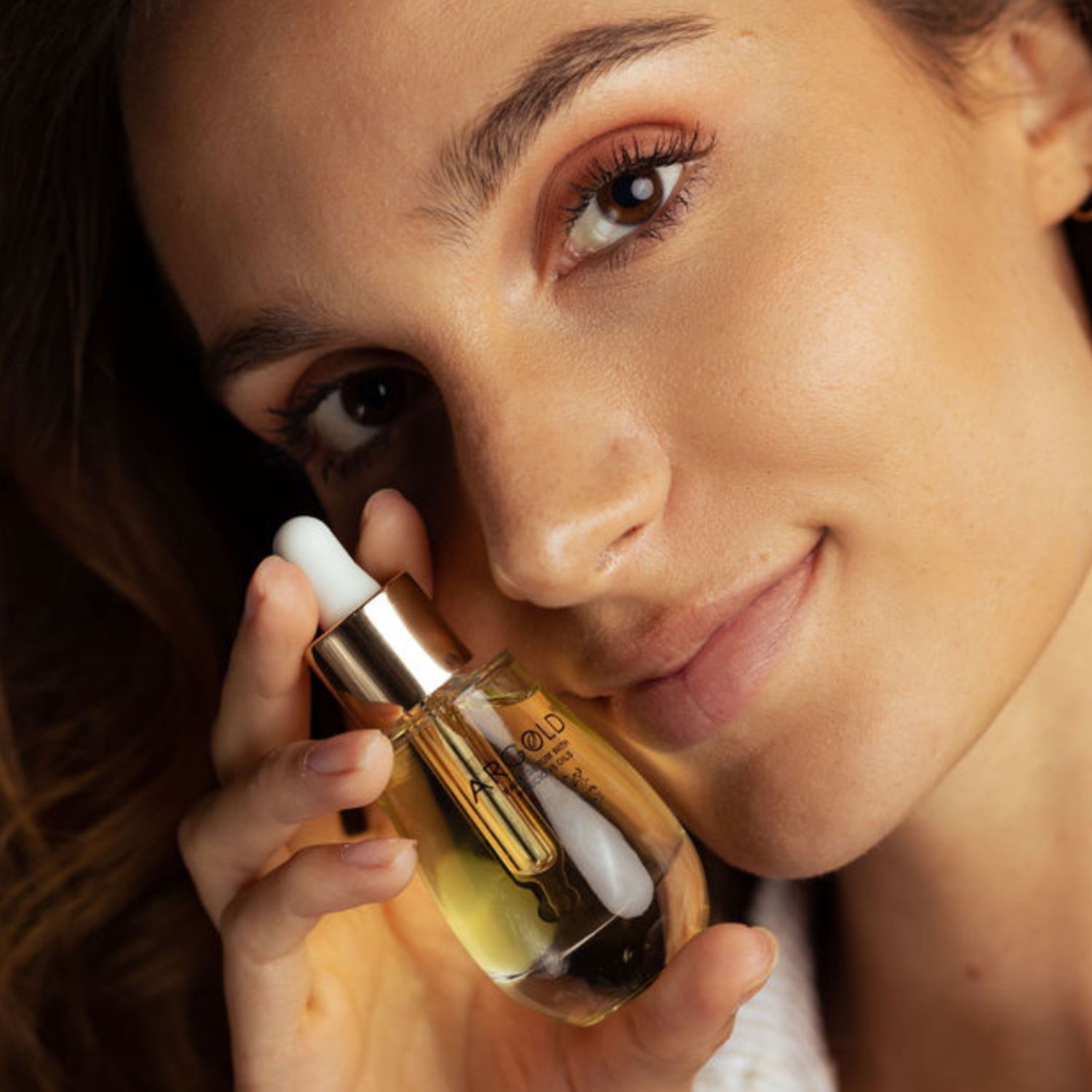

Spoiler alert: if your skin feels tight, stings, or peels as soon as temperatures drop, it doesn't necessarily mean it's dry. Indeed, **Winter is here, but your skin often becomes more vulnerable, and its skin barrier takes a hit. Before reaching for the richest cream in your bathroom, you first need to know what your skin truly needs. Because no, "dry" and "dehydrated" are not the same thing. We explain how to tell the difference, and most importantly, how to put an end to seasonal discomfort.
Dry or dehydrated: two problems, two treatments
The confusion is frequent, even among skincare enthusiasts. Yet, these two states are very different and require entirely distinct routines. It is essential **not to confuse hydration and nutrition**, as the response given to the skin will not be the same.
Dry skin
Dry skin is a skin type. It's written in your DNA. It produces less sebum than average, which means it lacks lipids, those famous natural fats that form the skin's protective barrier.
Typical signs:
Fine texture, barely visible pores
Constant tightness, not just in winter
Flaking, roughness, sometimes persistent redness
Few or no oily areas, even in summer
What does it need? Nutrition, with lipid-rich skincare to restore the skin barrier. If you recognize yourself in this description, you can also explore the world of **Dry skin** to better adapt your routine.
Dehydrated skin
Unlike dry skin, dehydrated skin is not a skin type, but a temporary condition. Good news: it's reversible. Bad news: it can affect all skin types, even oily skin.
Typical signs:
Occasional tightness, especially after showering
Feeling of discomfort, tingling
Dehydration lines, wrinkled skin appearance
Can be shiny and tight at the same time, a classic trap
What does it need? Hydration, based on humectant ingredients like hyaluronic acid, glycerin, or aloe vera, and a protected skin barrier to retain water.
|
Appearance |
Dry skin |
Dehydrated skin |
|
Nature of the problem |
Lack of fatty substances (lipids) |
Lack of water |
|
Skin type |
It is a permanent skin type |
It is a temporary condition |
|
Main cause |
Insufficient sebum production |
Excessive water loss or overly dry air |
|
Appearance |
Rough, flaky, sometimes coarse skin |
Dull, thin, sometimes shiny skin (if combination) |
|
Sensation |
Constant tightness, even after cream |
Tightness after showering or at certain times |
|
Areas affected |
Entire face (especially cheeks, sides of nose) |
Variable, often forehead and cheeks |
|
Suitable care |
Lipid-replenishing creams rich in butters and oils |
Moisturizing care rich in hyaluronic acid, glycerin, aloe vera |
Why does winter make all this worse?
Because in winter, we accumulate:
Cold and dry air outside
Very dry heating inside
Less humidity in the air, meaning more water evaporating from the skin
And sometimes, skincare that is too aggressive or unsuitable for the season
Result: even oily skin can become uncomfortable, tight, dull, or even peel. Hence the importance of distinguishing between lipid and water needs.
What you can do right now
If your skin is dry:
The organic argan oil day cream is nourishing and rich in lipids.
An oily serum in the evening can help strengthen the barrier.
Exfoliate gently, once a week maximum.
Tip: avoid foaming or harsh cleansers.
If your skin is dehydrated:
The white lily lotion should be applied after contact with water. Its hyaluronic acid-based formula helps retain water in the skin.
Apply your cream immediately afterwards to seal in the hydration.
For an even more targeted routine, you can also **Discover our products adapted to Dry Skin** if your skin lacks both comfort and nourishment.
Tip: avoid water that is too hot.
Even if the topic here concerns the face, this analysis logic also applies to hair fiber: **How to properly use a hair mask to intensely nourish or hydrate your hair relies on the same ability to identify the true need.

In conclusion
Dry skin needs to be nourished, dehydrated skin needs to be hydrated. And in winter, it is common for both problems to overlap. The essential thing? Listen to your skin, adjust your routine, and don't fall into the trap of "the richer, the better." A good winter routine is one that balances fats and hydrating active ingredients, without weighing down or stripping.
Need a boost to find the right routine for you? Contact us now via our chatbot or social media. We'll help you see clearly and build a routine that truly makes a difference.